The Cloud Success Services unit I supported grew over 18 months — I worked inside that growth, I don't claim to have caused it.
SAP Canada · Enterprise operations
Make change legible to leaders.

- Role
- Chief of Staff · Cloud Success Services
- Period
- Jul 2021 – Jul 2023
- Business context
- Enterprise cloud change
- Remit
- Leadership preparation and operating cadence
- Decisions
- Reusable QBRs, account views and ownership
- Scale
- 100+ leadership meetings supported
- Evidence status
- Redacted artefacts + formal reference
SAP was a change-management and executive-operations mandate inside Cloud Success Services — cloud transformation, subscription-model pressure, pandemic work rhythms, and repeated reorganisation, all at once. I supported the leadership of a business that scaled from $150M to $200M over 18 months. My value was learning the system fast enough to own useful parts of it: briefing pages, QBR templates, review cadence, and clearer follow-up.
The numbers
The operating context.
A C-suite meeting rhythm of roughly two a week required briefings, follow-up logic, and readable leadership context.
Standard templates and operating views designed to reduce preparation effort and make reviews comparable.
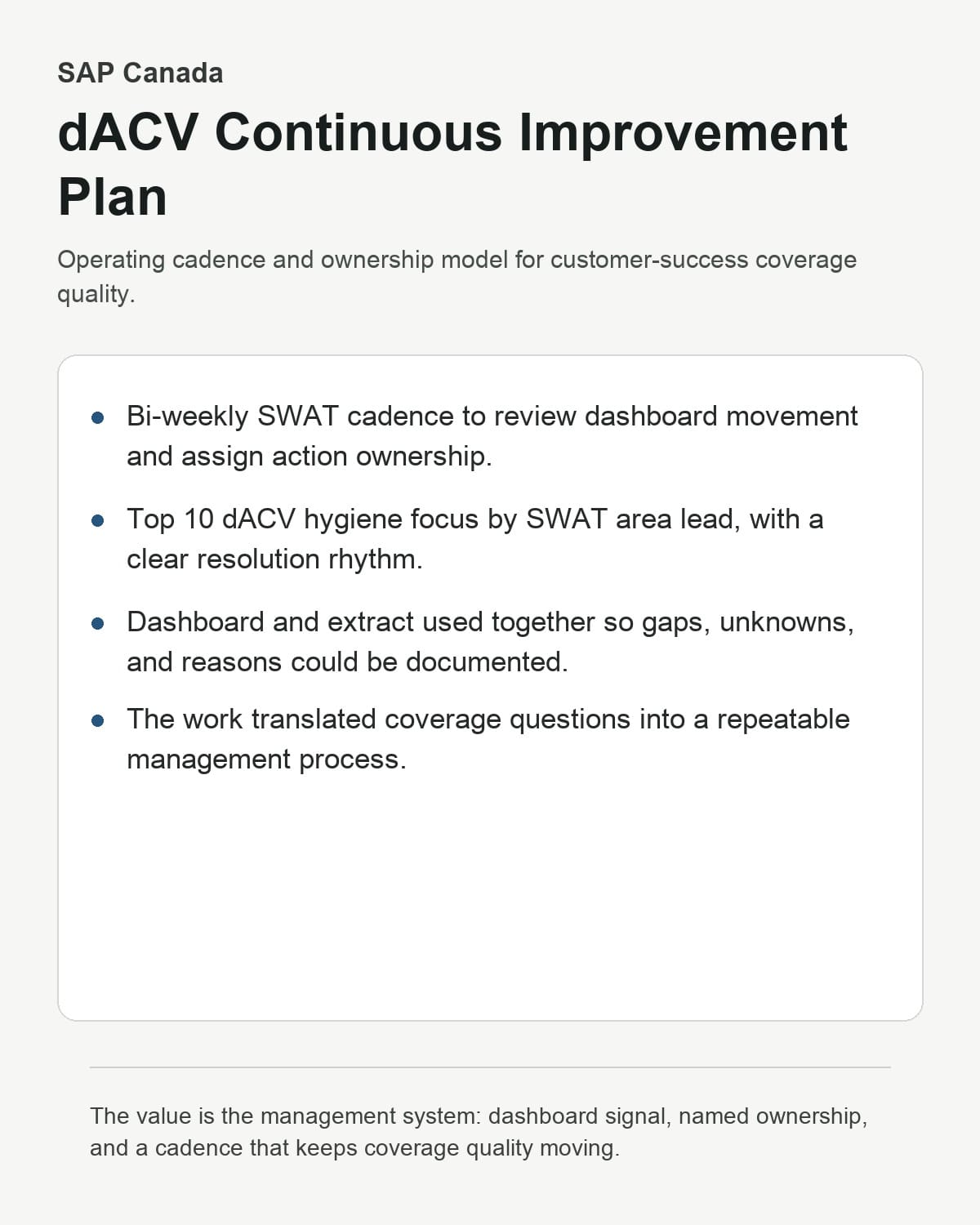
A dACV action rhythm turned coverage hygiene into dashboard review, named ownership, and resolution cadence.
The situation
A new starter inside constant change.
I entered a customer-success organisation mid-transformation: cloud and subscription pressure, pandemic rhythms, and repeated restructuring meant priorities, owners, and coverage kept shifting. The early challenge was absorbing customer success, account coverage, and leadership cadence at the same time — then turning that unfamiliar material into something usable.
The useful move wasn't to look impressive; it was to make complex rooms and documents easier for senior people to read and act on.
What I did
Learn the system, then build the operating layer.
01 · Enter the system
Learn the language before trying to be impressive.
The work started with listening, structuring notes, and translating unfamiliar enterprise vocabulary into usable material — customer success, cloud transformation, account coverage, and leadership priorities, all absorbed at once.
02 · Brief the leaders
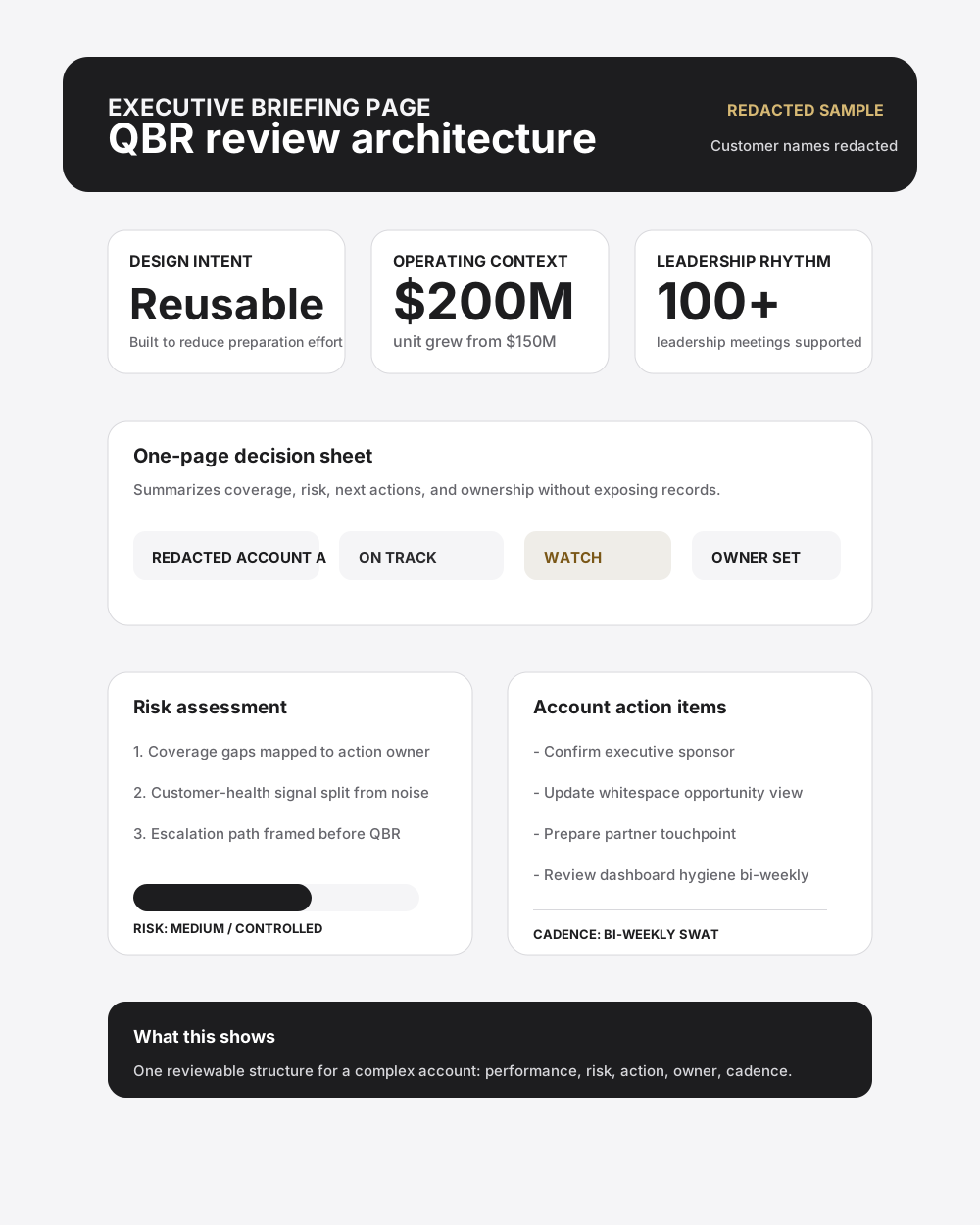
Compress complex conversations into decision sheets.
Executive preparation meant collecting inputs, clarifying what mattered for each meeting or account, and making a leader's time easier to use. While supporting preparation and follow-up for a cadence of 100+ C-suite meetings, I learned to compress multi-year cloud conversations into one-page decision views.
03 · Systematise business reviews
Make performance a story of priorities.
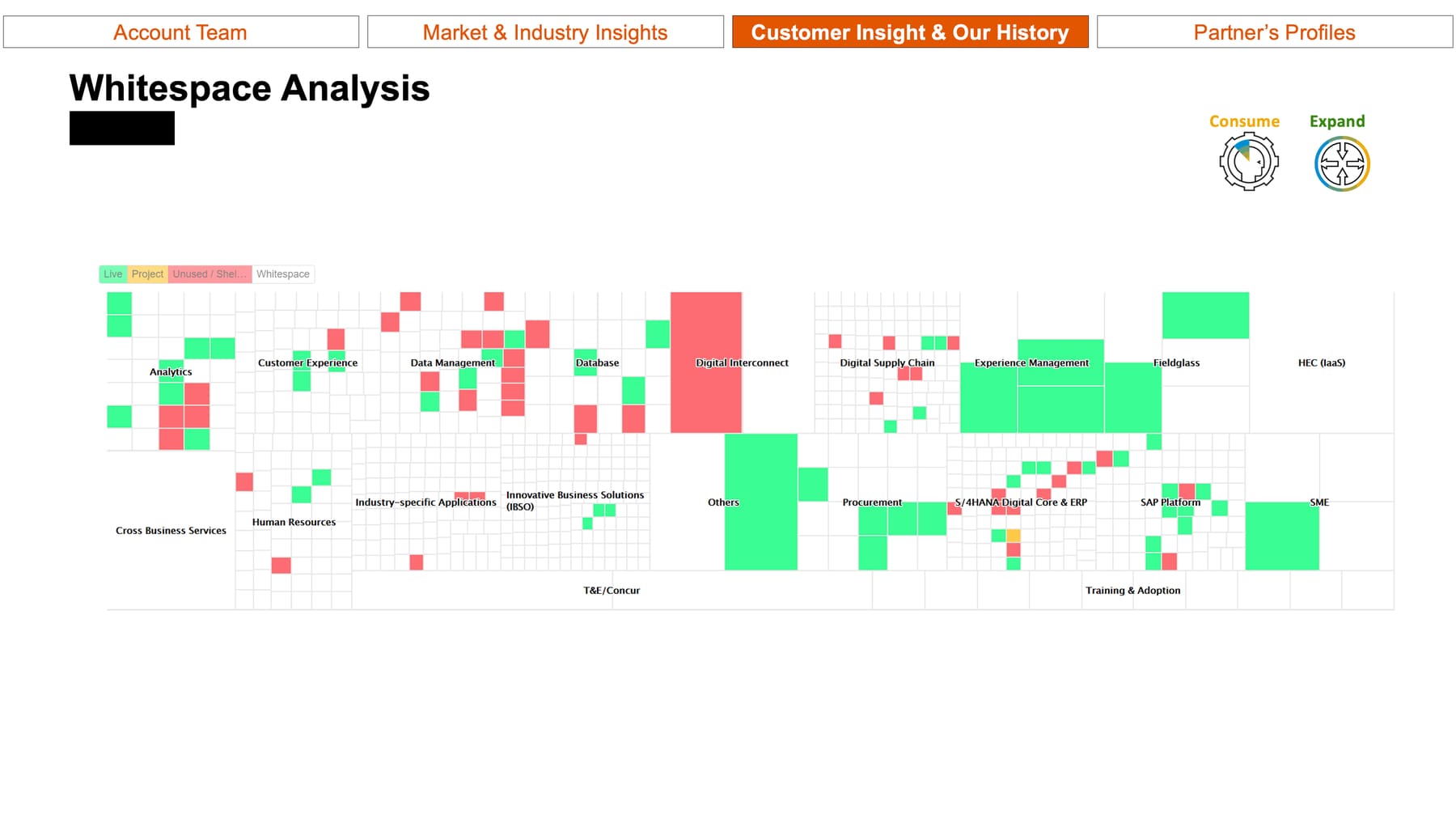
QBR material has to sit numbers, coverage gaps, customer risk, staffing pressure and regional priorities together. I built standard templates and operating views designed to reduce preparation effort and make reviews more comparable quarter to quarter; no unsupported time-saving percentage is claimed publicly.
04 · Turn strategy into rhythm
Give transformation topics an action path.
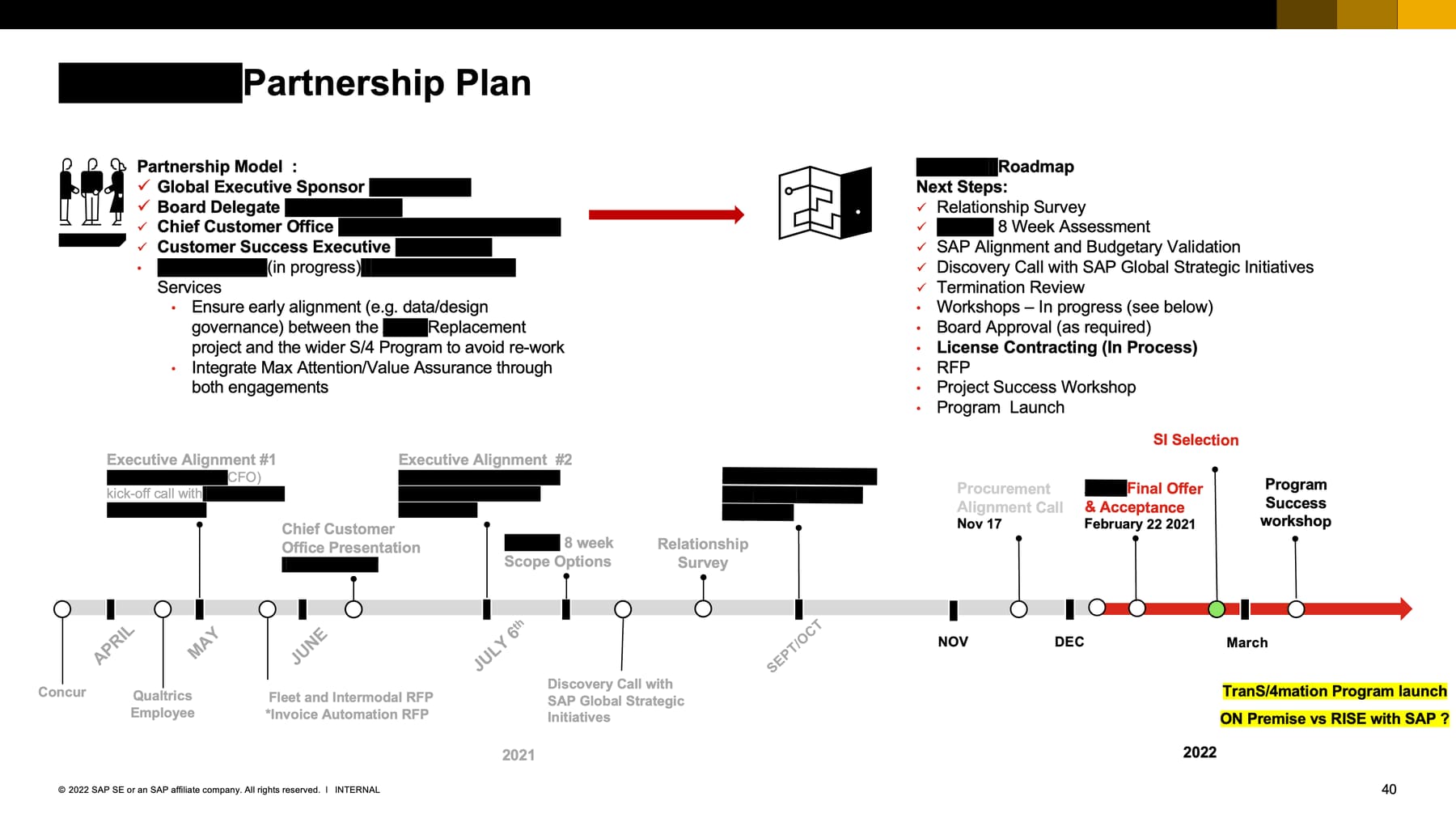
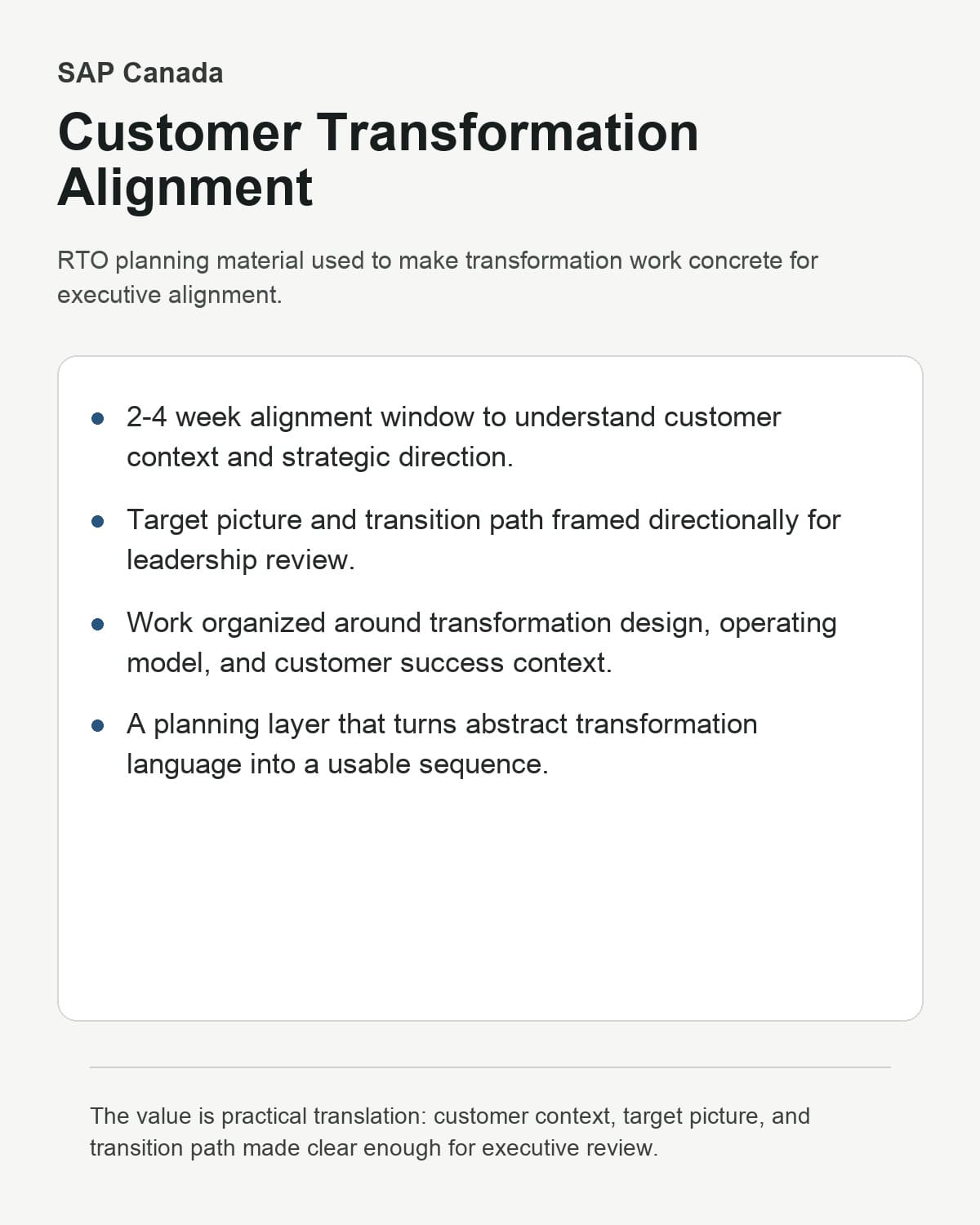
Broad coverage and transformation language became working rhythms: dashboard signal, named ownership, cadence, and a customer transition path leaders could review — from bi-weekly dACV hygiene to RTO alignment material.
What it changed
Leadership context that was easier to act on.
- Scattered account, coverage, and customer-success information became reviewable operating material.
- Quarterly reviews used a more consistent structure, designed to reduce preparation effort and make leadership context easier to compare.
- Coverage hygiene gained a cadence — dashboard, owner, resolution — instead of ad-hoc chasing.
- I proved I could learn a complex enterprise system fast enough to become useful in rooms bigger than me.
Direct reference
In their own words.
“Henrique's exceptional organizational skills, adaptability, and eagerness to learn have consistently been evident in his role at SAP Canada.”
Proof you can check
What can be shown from internal work.
Most of this work lived inside the company, so the proof is a leadership reference plus redacted operating material — not a public campaign. That's the honest shape of enterprise operations.
Where this transfers
What this chapter proves.
- Executive briefing
- Business-review systems
- Operating cadence
- Stakeholder follow-up
- Change adaptability
- Chief-of-staff support
Hiring next step
See how this work fits your brief.
The hiring brief shows where this experience creates the most value, with the boundaries and evidence useful to your decision.